AI Agent Security: Defending Against Malware from MCP Servers
The Rise of AI Agents and Their Inherent Security Challenges
As businesses across Turkey increasingly integrate AI agents into their operations—from automating customer support to optimizing supply chains—the efficiency gains are undeniable. These intelligent systems, designed to perform tasks autonomously, are transforming how enterprises function. However, with great power comes significant responsibility, especially concerning security. At SUNS Tech, we understand that safeguarding these advanced systems is paramount, particularly when facing emerging threats like malware waves originating from compromised servers.
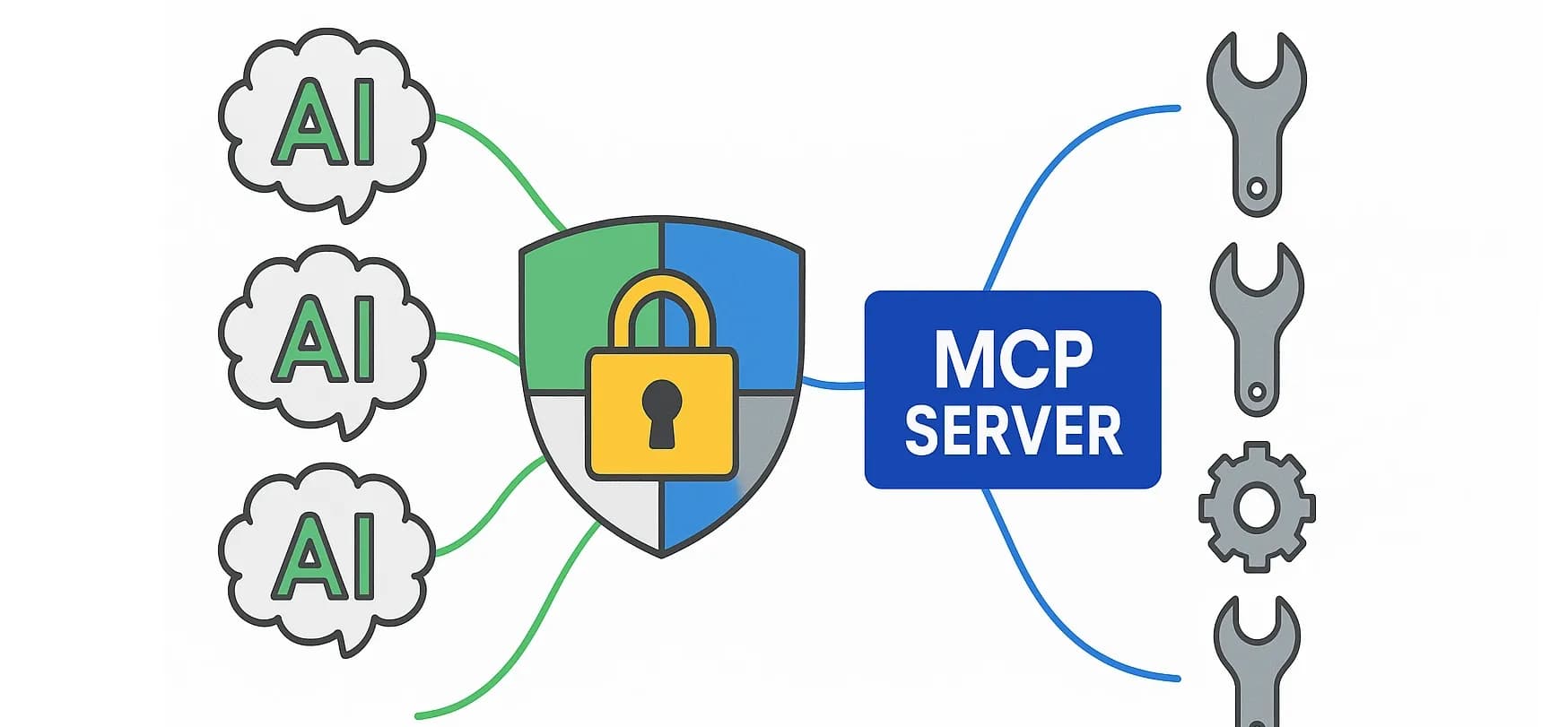
The digital landscape is constantly evolving, and cybercriminals are quick to exploit new technologies. A growing concern is the threat posed by malware originating from what we refer to as Managed Cloud Provider (MCP) servers. These are often legitimate cloud infrastructures that have been infiltrated and repurposed by malicious actors to host and distribute malware, directly targeting the sophisticated AI agents that drive modern businesses.
Understanding AI Agents and Their Unique Vulnerabilities
An AI agent is essentially a software program designed to perceive its environment, make decisions, and take actions to achieve specific goals, often without direct human intervention. In the Turkish market, we see them deployed in various sectors, from assisting SMEs with e-commerce operations to enhancing customer experience for large corporations. These agents rely heavily on data, algorithms, and connectivity, which unfortunately also form their primary attack surfaces.
Unlike traditional software, AI agents process vast amounts of sensitive data, learn from interactions, and often control critical business processes. This makes them highly attractive targets for cyberattacks. Vulnerabilities can arise from insecure APIs (Application Programming Interfaces) that allow agents to communicate, flaws in the underlying machine learning models, or insecure configurations that grant excessive permissions.
The Threat from Compromised MCP Servers: A Closer Look
When we discuss malware from "MCP servers," we're often referring to instances where legitimate cloud infrastructure, perhaps belonging to a Managed Cloud Provider, has been compromised. Attackers gain unauthorized access to these servers and use them as launchpads to distribute sophisticated malware. This malware can be designed to specifically target AI agents, aiming to:
-
Data Exfiltration: Steal sensitive data processed or stored by AI agents, which could include customer information, financial records, or proprietary business strategies, posing a significant risk for Turkish companies adhering to KVKK (Personal Data Protection Law) regulations.
-
Model Poisoning: Manipulate the training data or learning process of an AI agent, causing it to make incorrect, biased, or malicious decisions. Imagine an AI agent on an e-export platform being trained to reject legitimate orders.
-
Agent Hijacking: Take control of the AI agent itself, redirecting its actions for malicious purposes, such as initiating fraudulent transactions or spreading misinformation.
-
Resource Exploitation: Utilize the AI agent's computational resources for illicit activities like cryptocurrency mining, degrading performance and increasing operational costs.
Common misconception: Many believe that because AI agents operate autonomously, they are inherently secure and resilient against external threats. Reality: Their very autonomy and interconnectedness make them complex systems with numerous potential entry points for sophisticated attacks, demanding robust security measures from the outset.
Fortifying Your AI Agent Security: Our Strategic Approach
Protecting AI agents from malware and other cyber threats requires a multi-layered and proactive strategy. At SUNS Tech, our team leverages extensive experience in software development and cybersecurity to implement comprehensive solutions:
1. Robust Access Control and Authentication
Implementing strict authentication protocols and granular access controls ensures that only authorized users and systems can interact with your AI agents and their underlying data. This includes multi-factor authentication (MFA) and least privilege principles, limiting access to only what is absolutely necessary.
2. Secure API Design and Integration
Since AI agents often communicate via APIs, securing these interfaces is critical. We focus on designing APIs with strong validation, rate limiting, and encryption to prevent unauthorized access and data breaches. This is particularly vital for integrations with local payment systems or third-party logistics providers in Turkey.
3. Continuous Monitoring and Threat Detection
Proactive monitoring of AI agent activities, network traffic, and server logs is essential. Utilizing advanced threat detection systems allows us to identify unusual behavior or potential malware infections in real-time, enabling rapid response and mitigation.
4. Data Privacy and Compliance (KVKK Focus)
Ensuring that all data processed by AI agents complies with regulations like KVKK is non-negotiable. This involves data anonymization, encryption, and strict data retention policies, protecting both your business and your customers.
5. Regular Security Audits and Penetration Testing
Our team conducts regular security audits and penetration tests to identify and remediate vulnerabilities before they can be exploited by attackers. This proactive approach helps to harden your AI systems against evolving threats.
6. Secure Development Lifecycle for AI Solutions
Integrating security practices throughout the entire software development lifecycle—from design to deployment and maintenance—is fundamental. This "security-by-design" philosophy ensures that AI agents are built with resilience against threats from the ground up.
Partnering with SUNS Tech for Secure AI Agent Deployment
The complexities of AI agent security, especially when dealing with threats like malware from compromised MCP servers, demand specialized expertise. As an İstanbul-based software agency, SUNS Tech is dedicated to helping businesses like yours navigate these challenges. Our comprehensive services, including custom software development, web design, mobile application development, and digital transformation consulting, are all underpinned by a strong focus on cybersecurity.
We work closely with our clients to design, develop, and implement AI solutions that are not only innovative and efficient but also inherently secure. Our goal is to empower your business to leverage the full potential of AI without compromising on data integrity or operational continuity.
Frequently Asked Questions About AI Agent Security
-
What is the primary risk posed by malware from MCP servers to AI agents? Malware from compromised Managed Cloud Provider (MCP) servers can lead to data exfiltration, AI model poisoning, agent hijacking, and resource exploitation, severely compromising the integrity and functionality of your AI agents.
-
How can SUNS Tech help secure my AI agents against cyber threats? SUNS Tech offers comprehensive AI agent security solutions, including robust access control, secure API design, continuous monitoring, KVKK compliance, regular security audits, and a secure development lifecycle for all AI solutions.
-
Are AI agents inherently secure, or do they require specific security measures? AI agents are not inherently secure; their complexity and interconnectedness introduce unique vulnerabilities. They require specific, proactive security measures, including secure design, continuous monitoring, and regular auditing, to protect them from threats like malware.
-
What role does data privacy play in AI agent security, particularly in Turkey? Data privacy is crucial for AI agent security, especially in Turkey where KVKK compliance is mandatory. Ensuring data anonymization, encryption, and strict retention policies protects sensitive information and avoids legal repercussions.
-
Why is continuous monitoring important for AI agent security?Continuous monitoring is vital for AI agent security because it allows for real-time detection of unusual activities, potential malware infections, or attempts at model poisoning, enabling a swift response to mitigate risks before they escalate.
Is your business ready to embrace AI securely? Contact SUNS Tech today to discuss how our expert team can help you build and maintain robust, secure AI agent solutions tailored to your unique needs.