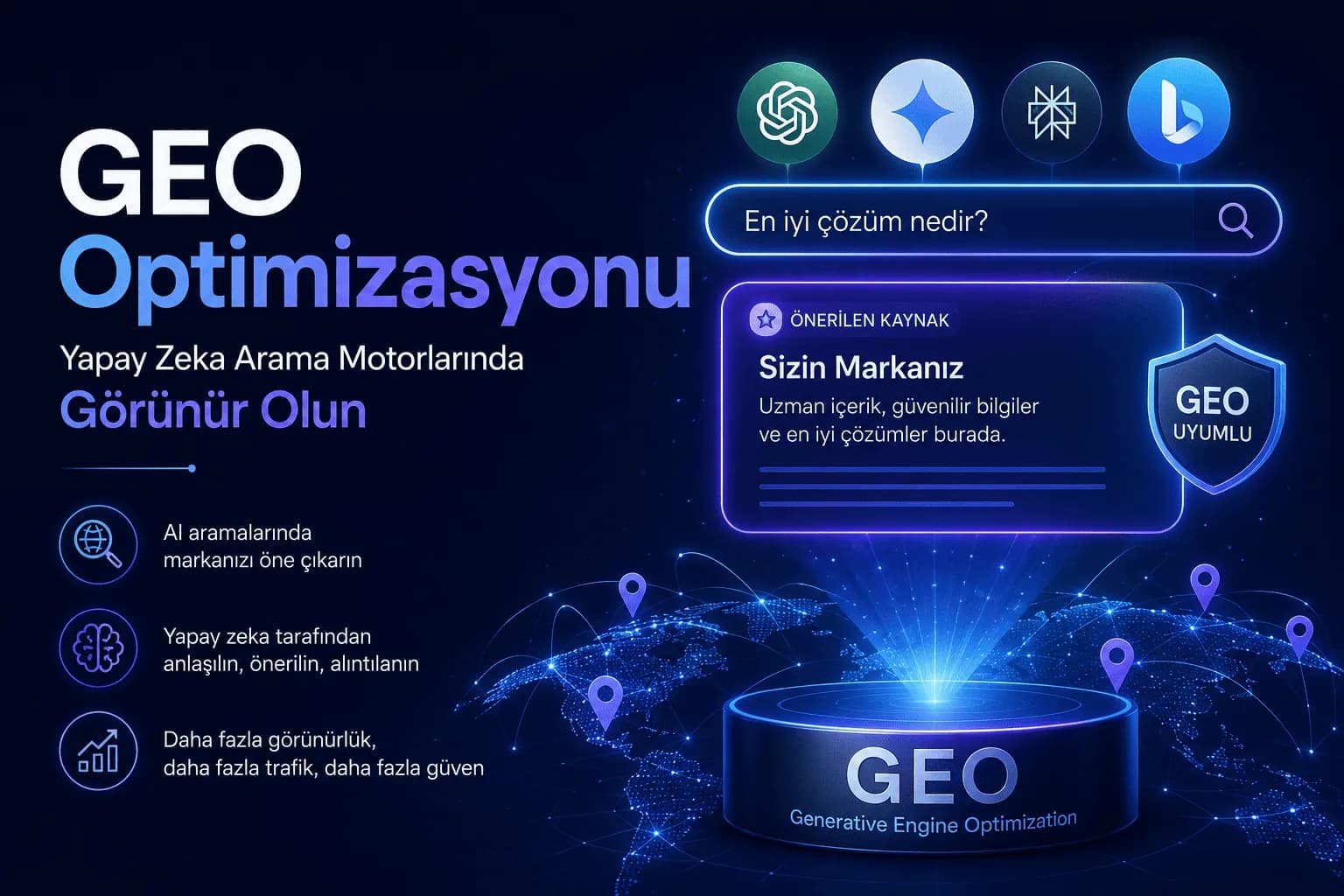
Generative Engine Optimization (GEO): Why AI Visibility is Critical
The Dawn of Generative Engine Optimization (GEO)
In an increasingly AI-driven digital landscape, traditional search engine optimization (SEO) is evolving. The rise of sophisticated generative AI models like ChatGPT, Claude, and Google's Gemini has fundamentally shifted how users seek information and make decisions. We are moving beyond the familiar blue links of search engine results pages (SERPs) into a world where AI provides direct, synthesized answers. This paradigm shift introduces a critical new discipline: Generative Engine Optimization (or GEO).
For brands and businesses, the implications are profound. If your brand, products, or services are not recognized, understood, and recommended by these powerful AI engines, you risk becoming invisible to a vast and growing audience. In simple terms: a brand unseen by ChatGPT and Claude is a brand that loses customers.
The Rise of Conversational AI and Its Impact on Search
For decades, SEO professionals have focused on optimizing for keywords, backlinks, and technical aspects to rank high on Google, Bing, and other traditional search engines. The goal was to appear prominently in a list of results, enticing users to click through to your website.
Generative AI changes this dynamic. When a user asks ChatGPT, "What's the best project management software for small teams?" or queries Claude about "sustainable fashion brands that ship worldwide," they don't necessarily want a list of links. They expect a concise, comprehensive, and accurate answer, often directly citing or synthesizing information from various sources. The AI acts as a sophisticated curator and summarizer.
This shift means that the journey from query to conversion is no longer about navigating a SERP; it's about being the trusted source that AI models reference and recommend in their generated responses. If your brand isn't part of the AI's knowledge base or trusted sources, you're effectively out of the conversation.
What is Generative Engine Optimization (GEO)?
Generative Engine Optimization (GEO) is the strategic process of optimizing your online presence, content, and data to be accurately understood, recognized, and favorably presented by generative AI models and conversational search interfaces. It's about ensuring your brand is not just discoverable by traditional search algorithms, but also intelligently processed and articulated by AI.
Unlike traditional SEO, which often focuses on ranking for specific keywords to drive clicks, GEO is about establishing factual authority, comprehensive knowledge, and clear semantic understanding around your brand and its offerings, so that AI models can confidently cite or recommend you when relevant queries arise.
Why Your Brand Needs GEO: The Invisible Brand Problem
The core imperative for GEO lies in preventing the "invisible brand" problem. Imagine a scenario where a potential customer asks an AI assistant for recommendations in your industry. If the AI, despite your brand's quality or market presence, fails to mention you, or worse, exclusively recommends competitors, you've lost a critical touchpoint.
-
Loss of Brand Awareness: AI-generated answers often bypass traditional SERPs. If your brand isn't mentioned in these answers, a significant portion of the audience will never encounter you.
-
Missed Customer Opportunities: When AI recommends products or services, it's a powerful endorsement. Missing out on these recommendations translates directly into lost leads and sales.
-
Erosion of Authority: If AI consistently references competitors as authoritative sources while overlooking your brand, it can subtly diminish your perceived expertise and market position over time.
-
Future-Proofing: As AI integration into daily life deepens, the reliance on AI-generated information will only grow. Brands that adapt now will secure their future relevance.
Key Differences: GEO vs. Traditional SEO
While sharing some foundational principles with traditional SEO, GEO introduces distinct priorities:
Traditional SEO Focuses On:
-
Keywords: Matching specific search terms.
-
Backlinks: Quantity and quality for domain authority.
-
Technical SEO: Crawlability, indexing, site speed.
-
Organic Rankings: Position in a list of links.
-
Click-Through Rate (CTR): Encouraging users to click your link.
GEO Focuses On:
-
Factual Accuracy & Authority: Providing verifiable, unambiguous information.
-
Structured Data & Schema Markup: Helping AI understand the context and relationships of your content.
-
Semantic Understanding: Optimizing for topics, entities, and relationships rather than just keywords.
-
Comprehensive Answers: Addressing all facets of a user's potential query.
-
Brand Mentions & Citations: Ensuring your brand is frequently and accurately referenced across the web.
-
Entity Recognition: Making sure AI understands your brand as a distinct, authoritative entity.
-
Trust & Verifiability: Content that AI can confidently use as a source.
Core Pillars of a Successful GEO Strategy
Implementing an effective GEO strategy requires a multi-faceted approach:
1. Factual Accuracy and Authority
AI models prioritize information that is demonstrably true and comes from authoritative sources. Ensure all information about your brand, products, and services is consistent, accurate, and supported by evidence. Become the definitive source for your niche.
2. Structured Data and Schema Markup
Schema markup (e.g., Organization, Product, Service, HowTo, FAQPage) helps AI models understand the context, type, and relationships of your content. This makes it easier for AI to extract specific facts and present them in generated responses.
3. Comprehensive and Contextual Content
Create content that answers every conceivable question related to your industry, products, and services. Think like an AI: provide complete answers, definitions, comparisons, and use cases. Cover topics in depth, establishing your brand as an expert.
4. Brand Mentions and Entity Establishment
Ensure your brand is consistently mentioned and accurately described across various reputable online sources – industry publications, news sites, review platforms, and directories. The more AI encounters your brand as a distinct, credible entity, the more likely it is to recognize and cite you.
5. Semantic SEO and Topic Clusters
Move beyond individual keywords to optimize for entire topics and semantic relationships. Organize your content into clusters around core themes, demonstrating a deep understanding of your industry. This helps AI connect related concepts and understand the breadth of your expertise.
6. User Intent and Conversational Queries
Anticipate how users will phrase questions to AI assistants. Optimize content not just for keywords, but for natural language questions and conversational intent. Provide direct answers to common questions about your offerings.
7. Reputation Management and Trust Signals
AI can also pick up on sentiment and reputation. Maintain a positive online reputation through customer reviews, testimonials, and active social listening. A brand perceived as trustworthy is more likely to be recommended.
Implementing GEO: Practical Steps for Brands
-
Content Audit: Evaluate existing content for accuracy, comprehensiveness, and potential for structured data.
-
Schema Implementation: Systematically apply relevant schema markup across your website.
-
Authority Building: Actively pursue PR, thought leadership, and partnerships to generate authoritative brand mentions.
-
AI Search Monitoring: Use tools (or manual checks) to see how AI models answer questions related to your industry and brand. Identify gaps and opportunities.
-
Content Strategy Evolution: Adapt your content creation to focus on answering complex questions, providing definitive information, and establishing expertise.
-
Internal Linking: Strengthen internal links to help AI understand the hierarchy and relationships within your content.
Conclusion: Embrace GEO for Future Relevance
The digital landscape is undergoing a monumental transformation driven by generative AI. For brands, ignoring Generative Engine Optimization is no longer an option; it's a direct path to obscurity. The era where a brand unseen by AI is a brand that loses customers is already upon us.
By proactively embracing GEO, focusing on factual authority, comprehensive content, and intelligent data structuring, brands can ensure they remain visible, relevant, and recommended in the conversational search era. The future of brand visibility lies in being understood and articulated by AI – make sure your brand is part of that conversation.