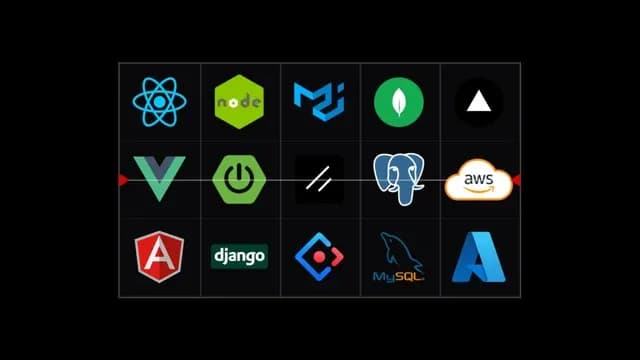
Choosing the Right Technology for Software Projects: Laravel, React, Next.js and Beyond
Technology selection directly determines your software project speed, cost, and long-term sustainability. Wrong choices lead to technical debt and cost increases, while the right choice makes your project future-ready. In this guide, we comprehensively share popular technologies strengths, ideal use cases, and SUNS Tech multi-technology experience.
Why Does Technology Choice Determine Your Project Fate?
The technology decision at project start is the hardest and most costly to change later. The right technology increases development speed, reduces maintenance costs, and makes team expansion easier.
-
Data Point: According to Stripe Developer Coefficient, developers spend 42% of their work time dealing with technical debt. The primary source is technology choices that do not fit project needs.
-
Impact: Wrong technology affects not just development but also performance, security, and scalability. Changing technology mid-project can increase budget by 50-200% and seriously damage team motivation.
Popular Technologies and Ideal Use Cases
Every technology shines in certain project types. The key is correctly analyzing your requirements and finding the best match.
Backend: Laravel vs. Node.js vs. Python/Django
Laravel is PHP-based and excellent for rapid prototyping and mid-scale web applications. Eloquent ORM, Blade templating, and its rich ecosystem significantly shorten development time. Node.js is ideal for real-time applications, high concurrency, and microservices. Python/Django is strong for data-intensive applications, AI/ML integrations, and rapid API development.
-
Laravel: Offers the fastest development time for e-commerce, CMS, SaaS dashboards, and enterprise web applications.
-
Node.js: Provides high-performance solutions for chat apps, real-time dashboards, API gateways, and streaming services.
-
Python/Django: Offers natural fit for data science, machine learning, and AI integration projects.
Frontend: React vs. Vue.js vs. Next.js
React is the most popular frontend framework with broad community support and flexible architecture. Vue.js shines in small-to-medium projects with its low learning curve. Next.js is React-based and the standard for SEO-friendly, performant full-stack applications with SSR, SSG, and API routes.
-
Choose Next.js or Nuxt.js for SEO-critical projects; server-side rendering lets search engines easily index your content.
-
Use React with Redux or Zustand for SPAs requiring complex state management.
-
Vue.js is ideal for rapid prototyping and small teams; low learning curve means productivity starts immediately.
Mobile: React Native vs. Flutter
The two major players in cross-platform mobile are React Native and Flutter. React Native is ideal for those wanting to quickly ship mobile apps with JavaScript knowledge and eases transition for web developers. Flutter produces high-performance, visually rich applications with Dart; it excels particularly in complex animations.
-
React Native: Choose if you have an existing JavaScript team and web code sharing matters.
-
Flutter: Choose if performance is critical, complex UI/animations are needed, and you want pixel-perfect results from a single codebase.
Backend Technologies Comparison
| Criteria | Laravel (PHP) | Node.js (JS) | Django (Python) |
|---|---|---|---|
| Dev Speed | Very fast; abundant ready solutions | Fast; flexible but needs setup | Fast; batteries-included |
| Performance | Good; sufficient for mid-scale | Very good; high concurrency | Good; needs optimization for CPU tasks |
| Scaling | Vertical and horizontal | Horizontal, microservice-friendly | Horizontal |
| AI/ML | Limited; external services | Moderate; TensorFlow.js | Excellent; direct Python ecosystem |
| Talent | Easy; PHP devs common | Easy; many JS devs | Moderate; niche but quality |
Frequently Asked Questions
Should I stick with one technology or use multiple?
It depends on project scale. For a single small-to-medium product, one main stack is advantageous for maintenance and team management. For multiple products with different requirements, using the most suitable technology for each is more efficient long-term.
Full-stack framework or separate frontend-backend?
If your project is simple and needs to ship fast, full-stack solutions like Laravel or Next.js are ideal. For complex backends serving different clients (web, mobile, IoT), API-first architecture with separate frontend-backend is more flexible.
What technologies does SUNS Tech specialize in?
At SUNS Tech, we actively develop with Laravel, .NET, React, Next.js, Vue.js, Node.js, Python, React Native, and Flutter. Instead of being tied to one technology, we select the most suitable stack per project. This multi-technology experience enables us to provide unbiased, optimal recommendations to our clients.
Conclusion: Let Us Choose the Right Technology Together
Technology selection is a strategic decision affecting your project success for years. Every framework has strengths and weaknesses; what matters is correctly analyzing your specific requirements. At SUNS Tech, with our multi-technology experience, we determine the best stack together and build future-ready solutions. Contact our team to evaluate your project.