Software Languages and Frameworks That Will Rise in 2026: Future Trends
The Direction of the Software World in 2026: Which Technologies Will Stand Out?
The software world is in a state of constant change and evolution. Every year new trends emerge, while certain languages and frameworks prove themselves and secure a permanent place in the industry. So, which programming languages and frameworks will appear on the most sought-after list heading into 2026? In this article, we'll explore the current lineup that will shape your software career and carry you into the future.
Popular Programming Languages of 2026: The Current List
Understanding the languages that will form the foundation of future software projects is critically important for both developers and technology leaders. Here are the programming languages expected to stand out in 2026:
Python: The Indispensable Tool of AI and Data Science
Python will continue its leadership in artificial intelligence (AI), machine learning (ML), data science, and automation in 2026, thanks to its simple syntax and vast library ecosystem. Backed by powerful libraries such as TensorFlow, PyTorch, and Scikit-learn, Python will remain the key to innovation in these fields.
JavaScript and TypeScript: The Dynamic Force of the Web
JavaScript, the undisputed leader in web development, plays a central role in both frontend and backend (via Node.js) development. TypeScript adds type safety to JavaScript, simplifying the development process in large-scale projects and reducing errors. This duo will remain indispensable for full stack developers.
Rust: The New Star of Performance and Security
Rust's popularity is rising rapidly for systems programming, embedded systems, and high-performance applications. Thanks to its memory safety guarantees and impressive performance, it is expected to be increasingly preferred in infrastructure, WebAssembly, and even some blockchain projects in 2026.
Go (Golang): The Choice for Cloud Computing and Microservices
Go, developed by Google, is an ideal language for cloud-based applications, microservice architectures, and network programming. With its simplicity, concurrency support, and high performance, Go will remain an important option in 2026 for companies looking to build scalable and efficient systems.
Java and C Sharp: The Solid Foundation of Enterprise Solutions
Java and C Sharp maintain their strong positions in enterprise-level applications, big data processing, and game development (C Sharp with Unity). Thanks to their large communities, mature ecosystems, and powerful frameworks (Spring Boot, .NET), the significance of these languages in the enterprise world will continue into 2026.
Standout Frameworks of 2026: The Most Widely Used Frameworks
Just like languages, the frameworks used alongside them accelerate and simplify development processes. Here are the frameworks that will maintain or grow in popularity in 2026:
Frontend Frameworks: Shaping the User Experience
-
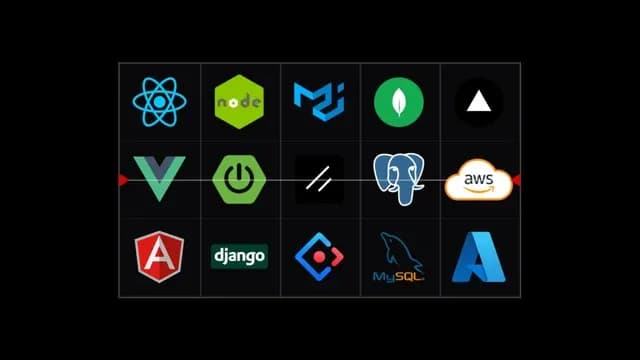
React: Backed by Meta, React will continue to lead web interface development with its flexibility and component-based architecture.
-
Angular: Google's comprehensive framework, Angular, will continue to be the go-to choice for large-scale enterprise applications.
-
Vue.js: With its ease of learning and flexibility, Vue.js will grow in popularity, particularly among small-to-medium-scale projects and beginners.
Backend Frameworks: Powerful and Scalable Structures
-
Node.js (Express.js, NestJS): Node.js, JavaScript's backbone on the backend, will play a key role in fast and scalable network applications. Frameworks like Express.js and NestJS strengthen this ecosystem.
-
Django (Python): With its rapid development and security-focused structure, Django will continue leveraging Python's power in web applications and API development.
-
Spring Boot (Java): The flagship of the Java ecosystem, Spring Boot, will remain the standard for microservices and enterprise applications.
-
FastAPI (Python): With its high performance and modern architecture, FastAPI will continue its rise as Python's new favorite for API development.
-
.NET (C Sharp): Developed by Microsoft, .NET will continue to be a powerful option for enterprise applications and cloud-based solutions, thanks to its cross-platform support and extensive toolset.
Full Stack Development in 2026: Technology Stacks
Demand for full stack developers will persist in 2026. Mastering both frontend and backend technologies will make candidates more competitive in the job market. JavaScript-based stacks such as MERN (MongoDB, Express.js, React, Node.js) and MEAN (MongoDB, Express.js, Angular, Node.js) will remain popular, while Python-based (Django/FastAPI + React/Vue) and .NET-based full stack solutions will also hold a firm place.
Which Language/Framework Should You Learn: Learn a Programming Language in 2026
Which language or framework you should learn depends on your career goals:
-
AI and Data Science: Python (TensorFlow, PyTorch)
-
Web Development (Full Stack): JavaScript/TypeScript (React, Angular, Vue, Node.js)
-
Systems Programming and Performance: Rust, Go
-
Enterprise Applications: Java (Spring Boot), C Sharp (.NET)
Python or Rust?
Comparing these two languages varies depending on their use cases. If your focus is rapid development, broad library support, and AI applications, Python is ideal. However, if memory safety, top-tier performance, and systems-level programming are your priorities, Rust is a far more suitable choice. Both will play important roles in different niches in 2026.
Conclusion
The year 2026 will bring continuous evolution and innovation to the software world. Languages like Python, JavaScript/TypeScript, Rust, and Go will maintain their leadership in AI, web development, cloud computing, and systems programming. Frameworks such as React, Angular, Vue, Node.js, Django, and Spring Boot will amplify the power of these languages and simplify development processes. To claim your place in the future of software, following these trends and continuously improving yourself is of great importance.