IoT and Smart Agriculture: Multiplying Efficiency with Technology
As world population grows, farmland shrinks and water resources diminish. The solution is producing more with less. IoT sensors and smart farming answer this need. We cover smart agriculture technologies, soilless farming, and SUNS Tech experience.
Why Is Agricultural Digital Transformation Inevitable?
Traditional farming falls short of growing food demand. Climate change, water scarcity, and soil erosion make things worse.
-
Data: According to UN FAO, global food production needs to increase 60% by 2050 while farmland is not expanding.
-
Impact: Maximizing yield from existing resources is the only solution. IoT smart farming reduces water 30-50% while increasing yield 20-30%.
How Smart Agriculture Works
Smart agriculture is based on sensor data collection, analysis, and automated control cycles.
IoT Sensors and Data Collection
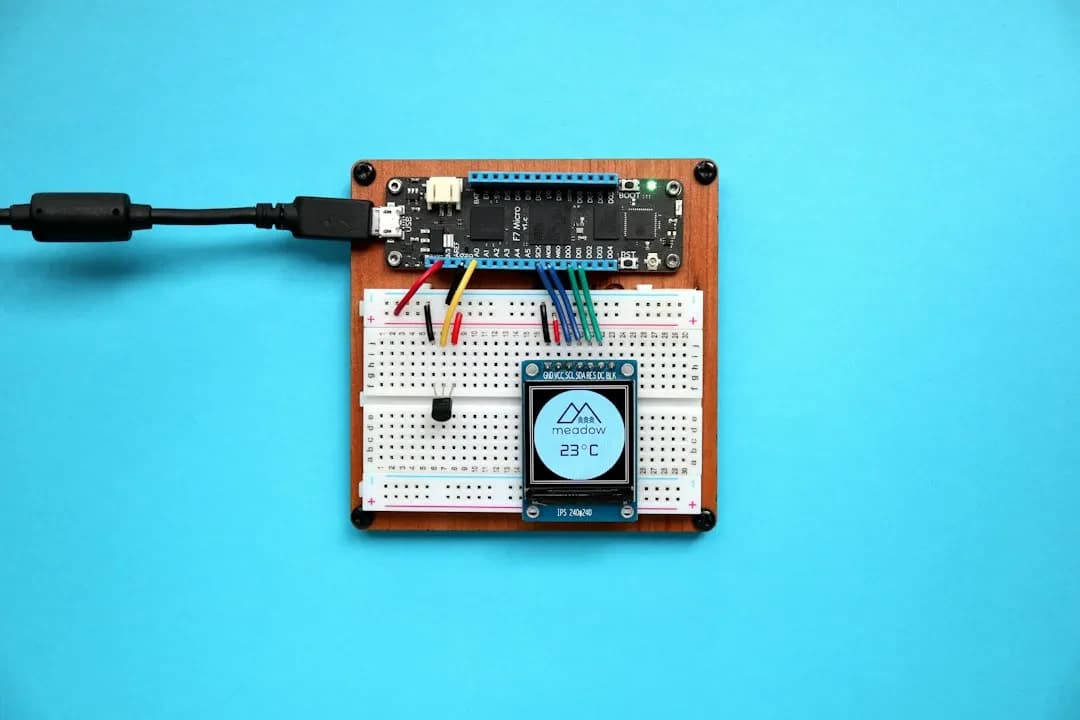
Sensors measure soil moisture, temperature, humidity, light, and nutrients in real time. Data is transmitted to cloud platforms wirelessly.
-
Soil Moisture Sensors: Precisely determine irrigation needs to prevent waste.
-
Weather Stations: Collect microclimate data for frost, heat, or rain warnings.
Soilless Farming
Hydroponic and aeroponic systems enable high-yield production without soil. Combined with IoT, pH, nutrients, and light are automatically optimized.
-
Produce with 90% less water than traditional farming.
-
Achieve year-round stable production regardless of season.
-
Minimize pesticide use to grow organic produce.
Traditional vs. Smart Farming
| Criteria | Traditional | IoT Smart Farming |
|---|---|---|
| Water | High; experience-based | 30-50% reduction |
| Yield | Standard; climate-dependent | 20-30% increase |
| Disease Detection | Visual, late | Sensor + AI early detection |
| Initial Cost | Low | Medium-high (ROI 1-2 years) |
| Scalability | Area-dependent | Unlimited with vertical farming |
FAQ
Only for large farms?
No. Even small greenhouses can use IoT sensors. A few moisture and temperature sensors provide meaningful data.
Is maintenance difficult?
Modern sensors offer months of battery life with wireless connectivity. Maintenance is minimal.
SUNS Tech projects?
Our team participated in TÜBİTAK-funded IoT soilless farming project, developing sensor collection, cloud analysis, and control systems. This led to academic publications and TEKNOFEST awards.
Conclusion
Smart agriculture is our strongest weapon against food crisis. Contact SUNS Tech to explore agricultural technology investments.