Website Design Decisions: A Practical SME Guide
A marketing manager at a manufacturing company in Kocaeli asked us a simple question not long ago: should they redesign the corporate site now, or wait for next year's budget cycle? That question comes up often, and the answer usually depends less on budget size and more on how clearly the scope has been defined before anyone signs anything. Website design is rarely about picking colors and fonts. It's about matching a business process to a technical outcome.
Before signing with any vendor, an SME decision maker needs clarity on three things: what phases the project will go through, what actually drives the price up or down, and what happens after launch. We'll walk through all three, because most disagreements between clients and agencies trace back to one of these points being left vague at the start.
What phases does a website design project go through?
Every serious website design project follows a sequence, even when the agency never labels it explicitly. Skipping a phase doesn't save time. It just moves the risk to a later, more expensive point in the project, usually right when the deadline is closest.
Discovery and needs analysis
This is where the agency and the client agree on what the site actually needs to do: generate leads, support an e-commerce catalog, present technical documentation, or simply establish credibility for a B2B buyer doing due diligence. Skipping this step is the single most common reason a project runs over budget. Requirements that should have surfaced on day one end up surfacing in week six instead, usually after design work has already started.
Design approval rounds
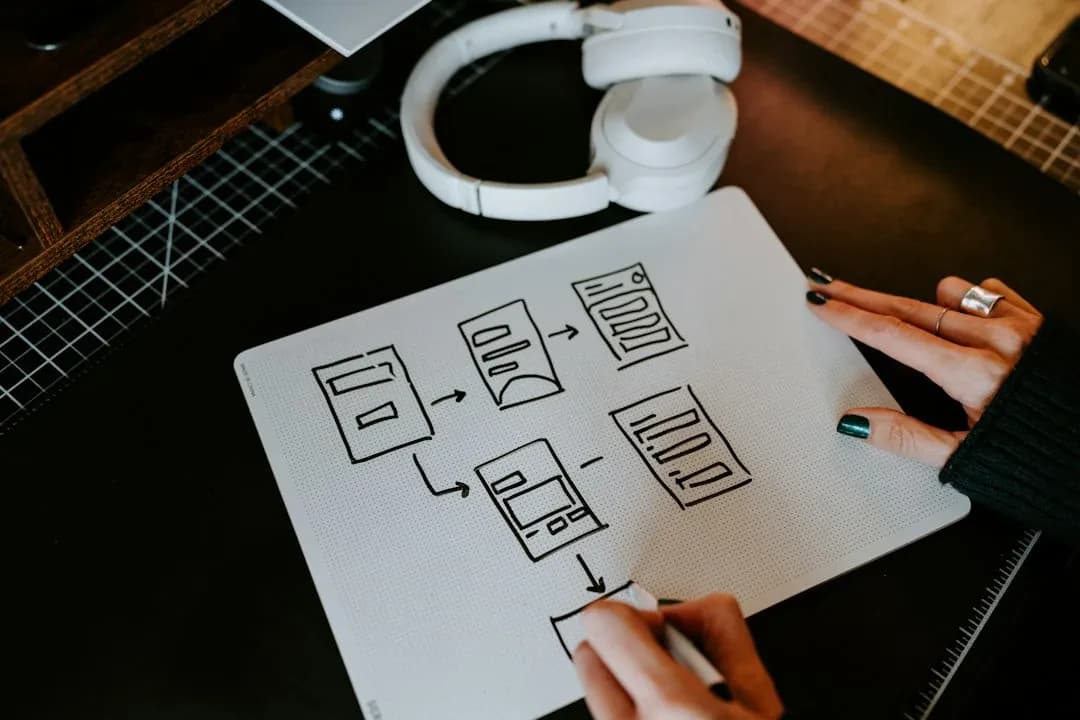
Once the structure and wireframes are approved, the visual design phase begins. This is also where timelines most often slip, and not because designers work slowly. Approval rounds on the client side routinely take longer than planned, especially when a single stakeholder insists on reviewing every draft personally. A founder who wants to sign off on each iteration will add weeks to a project that could otherwise move much faster.
Development and testing
After design sign-off, developers build the front-end and back-end, connect the content management system, and test across devices and browsers. A responsive layout that looks correct on a desktop monitor can still break on a mid-range Android phone if this phase gets rushed. Testing time should never be the first thing cut when a deadline tightens, because that's exactly when visitors start noticing broken menus and overlapping text.
Ready-made template or custom website design?
This decision shapes both your budget and your brand's visual ceiling, so it deserves more thought than it usually gets in the first vendor conversation.
The advantage and limit of ready-made templates
A template is a pre-built structure adapted to your brand colors, logo, and content. It launches faster and costs less, which makes it a reasonable choice for a company that needs a functional online presence without heavy differentiation. The limit shows up later: your competitors may be running a near-identical structure, and certain layout or interaction choices simply cannot be changed without touching the underlying code.
The flexibility custom design brings
Custom website design starts from a blank page. The user experience, navigation logic, and visual identity get built specifically for your business, which matters most when your product or service doesn't fit standard template logic, such as a technical B2B catalog or a multi-step service request flow. The trade-off is straightforward: more flexibility requires more design and development hours, which means a longer timeline and a higher budget. There's no universally correct answer here, only the one that fits what your business sells and how it sells it.
What determines the cost of website design?
Cost is driven by scope, not by an agency's hourly rate alone. The number of pages, whether the design is custom or template-based, and the integrations required, such as payment systems, CRM connections, or multilingual content, all move the price in different directions. The client's own content readiness plays a bigger role in the final number than most people expect going in.
A five-page site with ready content and a template approach sits at one end of the spectrum. A multilingual corporate site with a custom CMS, SEO-structured content, and integration with internal business tools sits at the other. Neither price point is inherently right or wrong. The real question is whether the scope matches what your business actually needs this year, not what might be useful someday. Our web design and development services are typically scoped after exactly this conversation, because quoting a number before the scope is clear doesn't help either side.
A common mistake: leaving content preparation for last
Many SME teams assume content, text, images, product descriptions, can be added after the design is finished. In practice, this is one of the most reliable ways to delay a launch date. Design decisions such as section length, image placement, and navigation depth all depend on the actual content, not on placeholder text filling the gaps.
When content arrives late, developers either wait, which pushes the timeline, or they build around placeholder copy, which usually means rework once the real content lands. If your team doesn't have the bandwidth to write and gather content early, it's worth raising this directly with your vendor before the project starts, since some agencies include content support and others don't. Getting this agreement in writing early avoids a familiar, frustrating back-and-forth in week five.
What criteria should you check when choosing a vendor?
Price comparisons alone tell you very little about whether a vendor will deliver on time or leave you dependent on them indefinitely. A few concrete checks matter more than a polished sales pitch.
Portfolio and reference projects
Look at projects similar in scale and industry to yours, not just the most visually impressive examples on the agency's homepage. A corporate website design for a logistics company and an e-commerce storefront for a fashion brand require different skill sets, even if both look clean in a portfolio screenshot. You can review examples of past work in our portfolio before shortlisting anyone.
Support and maintenance process
Ask directly what happens after launch: who applies security updates, who handles content changes, and what the response time looks like if something breaks. A site that is well designed but poorly maintained accumulates technical debt quietly, and the cost of fixing it later is often higher than the cost of a proper maintenance plan from day one.

How long does website design usually take?
A simple corporate site with ready content can typically be completed in around two weeks. Projects requiring custom design, multiple languages, or CMS integration usually take four to eight weeks, and the single biggest factor that stretches this timeline is delayed content delivery or slow approval rounds on the client side.
These figures are typical ranges, not fixed promises, since every project carries its own variables. A company that has its content, branding guidelines, and decision maker available from day one will move noticeably faster than one that needs to gather all three mid-project. If your team is still assembling internal approvals, it's worth building that lead time into the plan before the contract is signed rather than discovering it halfway through development.
If you already have a sense of your scope, number of pages, languages needed, integrations required, the next useful step is getting a concrete quote rather than guessing at a budget range. You can share your project details through our quote request page and get a proposal matched to your actual requirements.